Book Review: Design For How People Learn

Design For How People Learn, by Julie Dirksen (ISBN 978-0321768438)
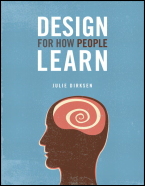
I saw the title for this book roll across my Twitter feed β€” can't remember from who, sorry β€” from someone who had a blog and was advocating for other bloggers to check this book out. When I read the abstract for the book, I immediately added it to my reading list.

"Whether it's giving a presentation, writing documentation, or creating a website or blog, we need and want to share our knowledge with other people. But if you've ever fallen asleep over a boring textbook, or fast-forwarded through a tedious e-learning exercise, you know that creating a great learning experience is harder than it seems."
Read more β†’

Five Functional Facts about TACACS+ in ISE 2.0

The oft-requested and long awaited arrival of TACACS+ support in Cisco's Identity Services Engine (ISE) is finally here starting in version 2.0. I've been able to play with this feature in the lab and wanted to blog about it so that existing ISE and ACS (Cisco's Access Control Server, the long-time defacto TACACS+ server) users know what to expect.

Below are five facts about how TACACS+ works in ISE 2.0.

Read more β†’

Speaking Notes: The Data Center Network Evolution

I will be presenting at the Cisco Connect Canada tour in Edmonton and Calgary on November 3rd and 5th, respectively. My presentation is about that three letter acronym that everyone loves to hate: SDN :-)

I will talk about SDN in general terms and describe what it really means; what we're really doing in the network when we say that it's "software defined". No unicorns or fairy tales here, just engineering.

Next I'll talk about three areas where Cisco is introducing programmability into its data center solutions:

  • Application Centric Infrastructure
  • Virtual Topology System
  • Open NX-OS

Below are the notes I made for myself while researching these topics and preparing for the presentation. At the bottom of this post is a Q&A section with some frequently asked questions.

Read more β†’

How a Cisco SE Navigates Cisco.com

At the time that I'm writing this I've been working at Cisco for just over 3 years as a Systems Engineer. Prior to that I worked for multiple Cisco customers and was heavily involved in Cisco technologies. I know what a monster cisco.com is and how hard it can be to find what you're looking for.

Since starting at Cisco, the amount of time I've spent on cisco.com has shot up dramatically. Add to that studying for my CCIE and it goes up even more. In fact, cisco.com is probably the number 1 or 2 site I visit on a daily basis (in close competition with Google/searching).

After spending all this time on the site and given how vast the site is and how hard it can be to find that specific piece of information you're looking for, I'm writing this post as an aid to help other techies, like myself, use the site more effectively.

Read more β†’

When a Port Channel Member Link Goes Down

Mohamed Anwar asked the following question on my post "4 Types of Port Channels and When They're Used".

"I need a clarification, where if a member link fails, what will happen to the traffic already sent over that link ? Is there any mechanism to notify the upper layer about the loss and ask it to resend ? How this link failure will be handled for data traffic and control traffic ?"

β€” Mohamed Anwar

I think his questions are really important because he hits on two really key aspects of a failure event: what happens in the data plane and what happens in the control plane.

A network designer needs to bear both of these aspects in mind as part of their design. Overlooking either aspect will almost always open the network up to additional risk.

I think it's well understood that port channels add resiliency in the data plane (I cover some of that in the previous article). What may not be well understood is that port channels also contribute to a stable control plane! I'll talk about that below. I'll also address Mohamed's question about what happens to traffic on the failed link.

Read more β†’

The Correct Mask for a PE's Loopback0

As I've written about previously (The Importance of BGP NEXT_HOP in L3VPNs), the BGP NEXT_HOP attribute is key to ensuring end to end connectivity in an MPLS L3VPN. In the other article, I examine the different forwarding behavior of the network based on which of the egress PE's IP addresses is used as the NEXT_HOP. In this article I'll look at the subnet mask that's associated with the NEXT_HOP and the differences in forwarding behavior when the mask is configured to different values.

There is a lot of (mis-)information on the web stating that the PE's loopback address β€” which, as I explain in the previous article, should always be used as the NEXT_HOP β€” must have a /32 mask. This is not exactly true. I think this is an example of some information that has been passed around incorrectly, and without proper context, and is now taken as a rule. I'll explain more about this further on in the article.

Read more β†’

The Importance of BGP NEXT_HOP in L3VPNs

In an MPLS network with L3VPNs, it's very easy for the NEXT_HOP attribute of a VPN route to look absolutely correct but be very wrong at the same time. In a vanilla IP network, the NEXT_HOP can point to any IP address that gets the packets moving in the right direction towards the ultimate destination. In an MPLS network, the NEXT_HOP must get the packets moving in the right direction but it must also point to the exact right address in order for traffic to successfully reach the destination.

Read more β†’

Packets of Interest (2015-06-19)

It's been a while since I've done a POI so here we go.

The Mystery of Duqu 2.0: a sophisticated cyberespionage actor returns

https://securelist.com/blog/research/70504/the-mystery-of-duqu-2-0-a-sophisticated-cyberespionage-actor-returns/

Kaspersky Lab found this new variant of the Duqu malware in their own network. They wrote a paper based on their analysis of this new malware. It fascinates me how sophisticated these software packages are and how much effort the threat actors put into them.

Diffie-Hellman Key Exchange

Diffie-Hellman (DH) is the world's first public key crypto system. It's used in everything from secure browsing, to secure shell. This video visually demonstrates how the Diffie-Hellman key exchange works. The best part is that you don't need to know anything about crypto to follow along.

Read more β†’